- contact@insightfortify.com
The platform
Every surface, one risk model
Each surface is scanned by an open-source engine that is good at it. Every result goes through the same normalisation, correlation and scoring, so a leaked key, a vulnerable package and a public bucket can be compared on one scale and land in one queue.
The core
Correlation, context and a score that explains itself
Correlate
One finding, many sources
Each result is fingerprinted on what it is (the rule or CVE, the package, the location), so the same issue from Trivy, the SBOM and a rescan of another branch becomes one finding with its sources listed.
- Fixed findings close themselves on the next scan
- Reopened findings keep their history
Context
What the scanner can’t know
Which services face the internet, which handle card data or PII, which run compensating controls, which code is test-only. You set it once per repository or cloud resource, and every finding on it inherits it.
- Threat intel: CISA KEV and FIRST EPSS, re-synced every six hours
- Runtime evidence from DAST and Falco
Prioritise
P1–P4, with an SLA each
A 0–10 score from named, signed factors. Priorities carry the SLA you set (7, 30, 90 days by default), and “actionable” means the priorities you choose to act on.
- Every analyst decision recorded with the factors it saw
- Snoozes expire; dismissals keep their reason
Code & supply chain
From the commit to the container
Connect a GitHub or GitLab organisation, or push results from CI. Each repository is scanned for vulnerable dependencies, insecure code, secrets across its full history and misconfigured infrastructure as code. Container images are scanned and tied back to the repository that builds them.
- SCA — Trivy; dev-only and transitive scope lower the score
- SAST — Opengrep with your rule packs, as SARIF
- Secrets — Gitleaks across the whole history, plus your own patterns
- IaC — Checkov on Terraform, CloudFormation, Kubernetes, Dockerfiles
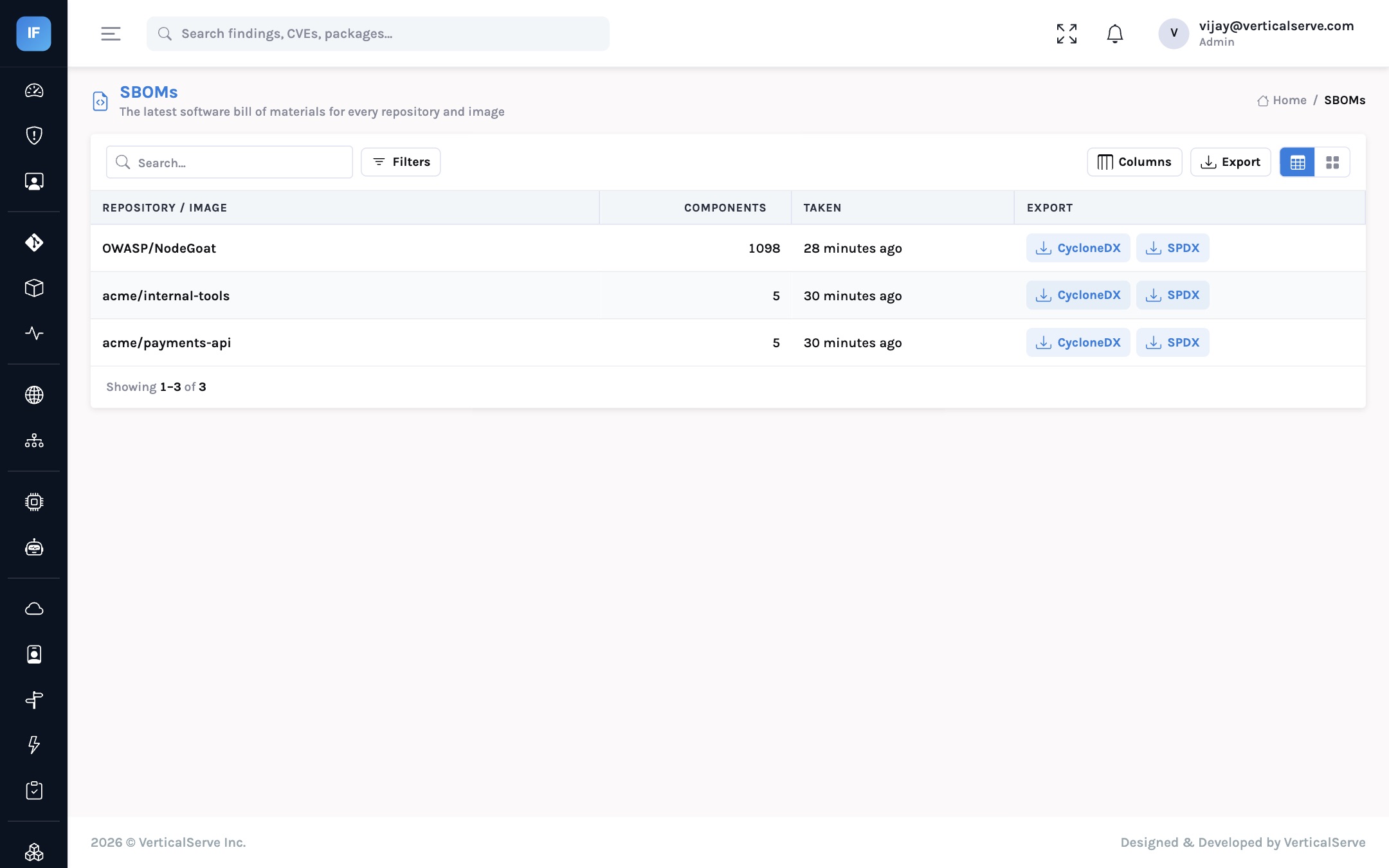
- SBOM — Syft CycloneDX, searchable by component and version
- CI gate — pass or fail on the priorities you choose
Applications & APIs
Test what is running, not only what is written
Dynamic testing with OWASP ZAP confirms what static tools can only suspect, and a finding confirmed at runtime is scored higher. Nothing is scanned until a security lead verifies the target is the organisation’s to test, with a written attestation kept in the audit trail.
- DAST — baseline and full scans on a schedule
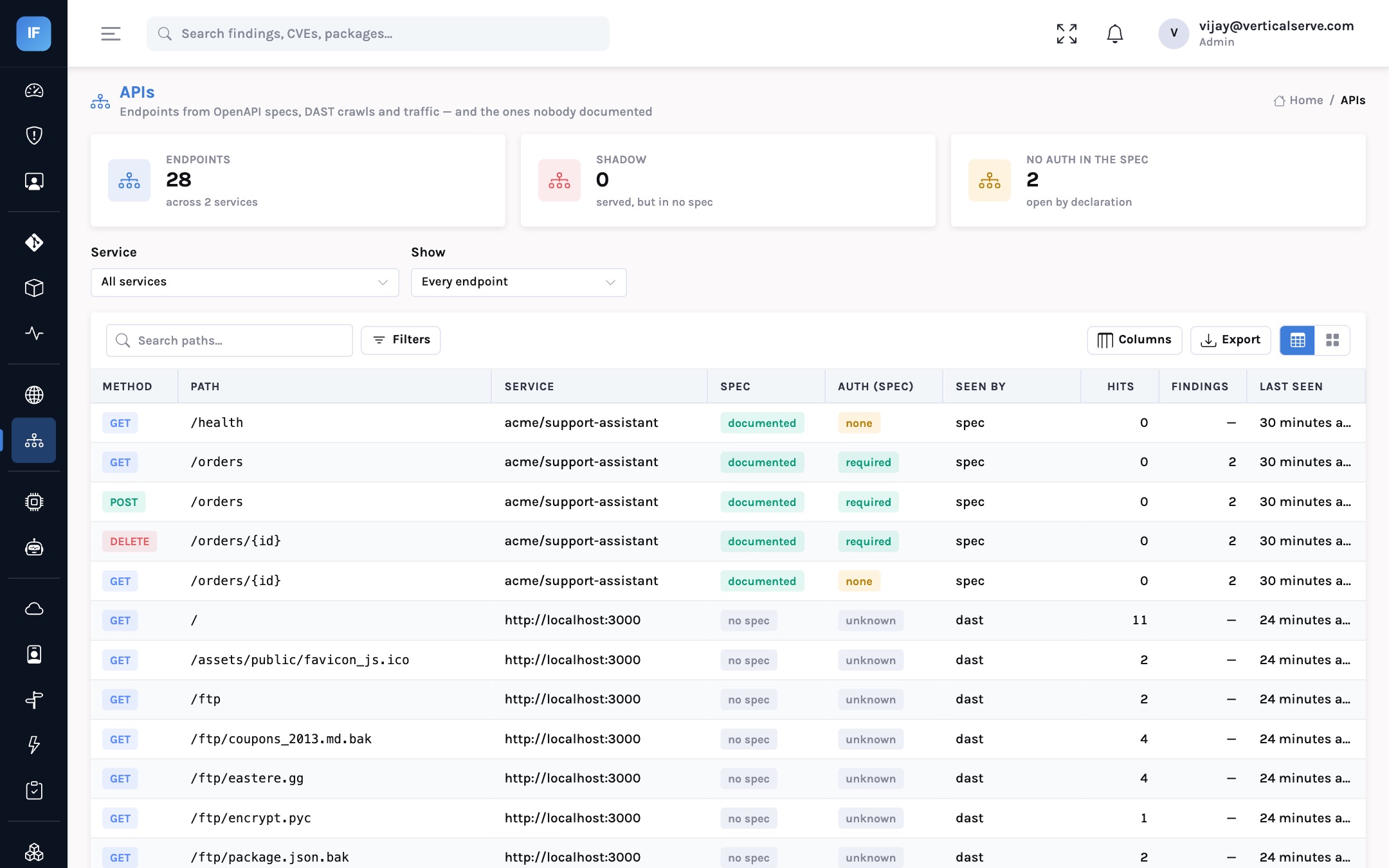
- API inventory — endpoints from code, OpenAPI specs and observed traffic
- Shadow APIs — served but not in any spec, raised as OWASP API9 findings
- Authentication — which documented endpoints require it, and which do not
Cloud, identities & runtime
CNAPP without a second product
Cloud posture, entitlements and runtime detections go into the same queue, are scored the same way, and are joined to the code findings to form attack paths.
CSPM
Posture
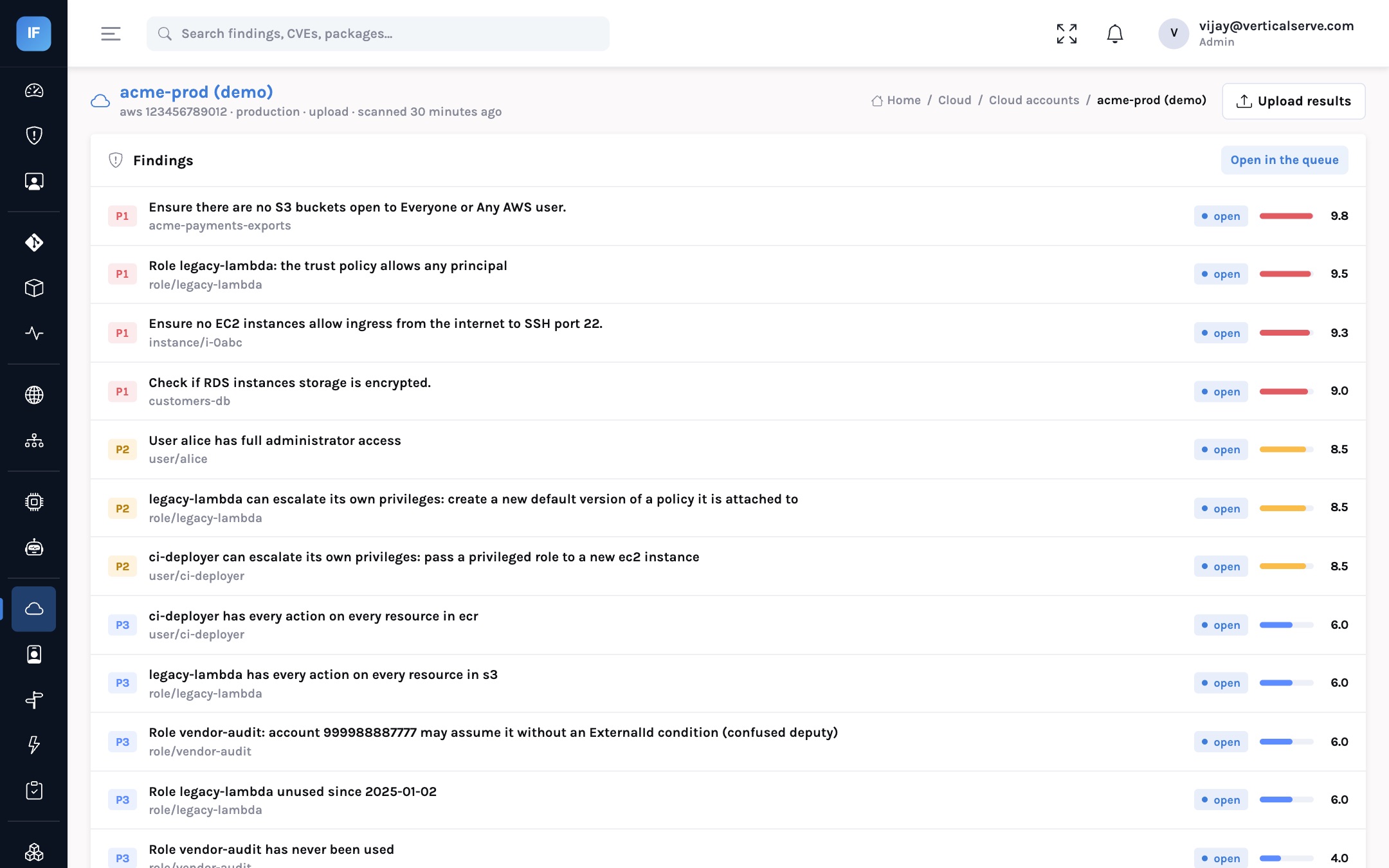
Prowler checks across AWS, Azure and Google Cloud through read-only access you grant, or uploaded results. Resources inventoried, public ones flagged, and you mark which hold sensitive data.
CIEM
Identities
Effective permissions of every user and role, folded from all their policies. Administrators, escalation routes such as iam:PassRole, blast radius, and a least-privilege policy from what was actually used.
Paths
Attack paths
Internet → vulnerable workload → over-privileged identity → sensitive data, computed in PostgreSQL and ranked as a whole. Fix any one hop and the path closes.
CWPP
Runtime
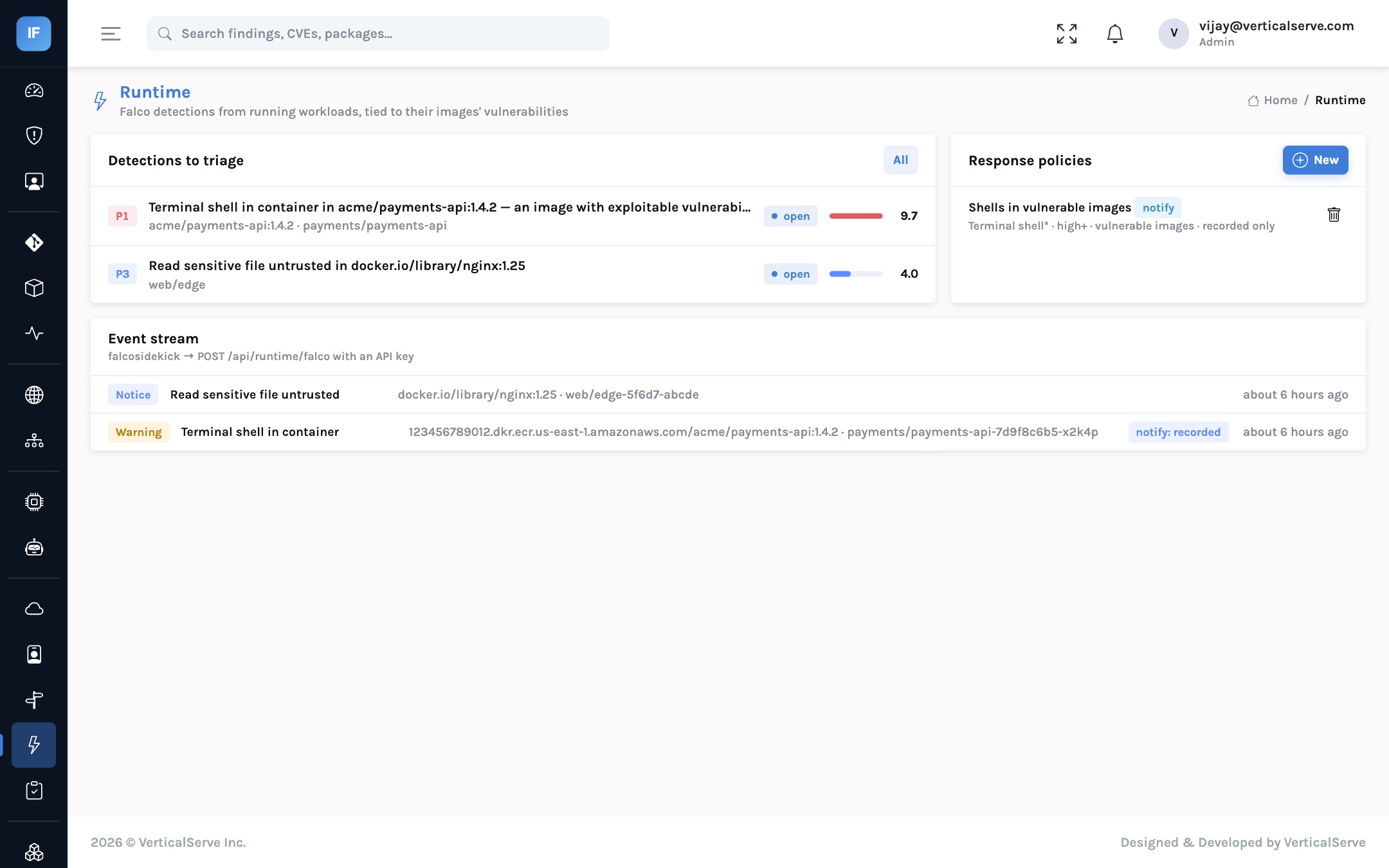
Falco detections via falcosidekick, tied to the vulnerabilities in the running image. Response policies hand isolate or stop actions to a responder you run.
Compliance
Which requirements are failing, and why
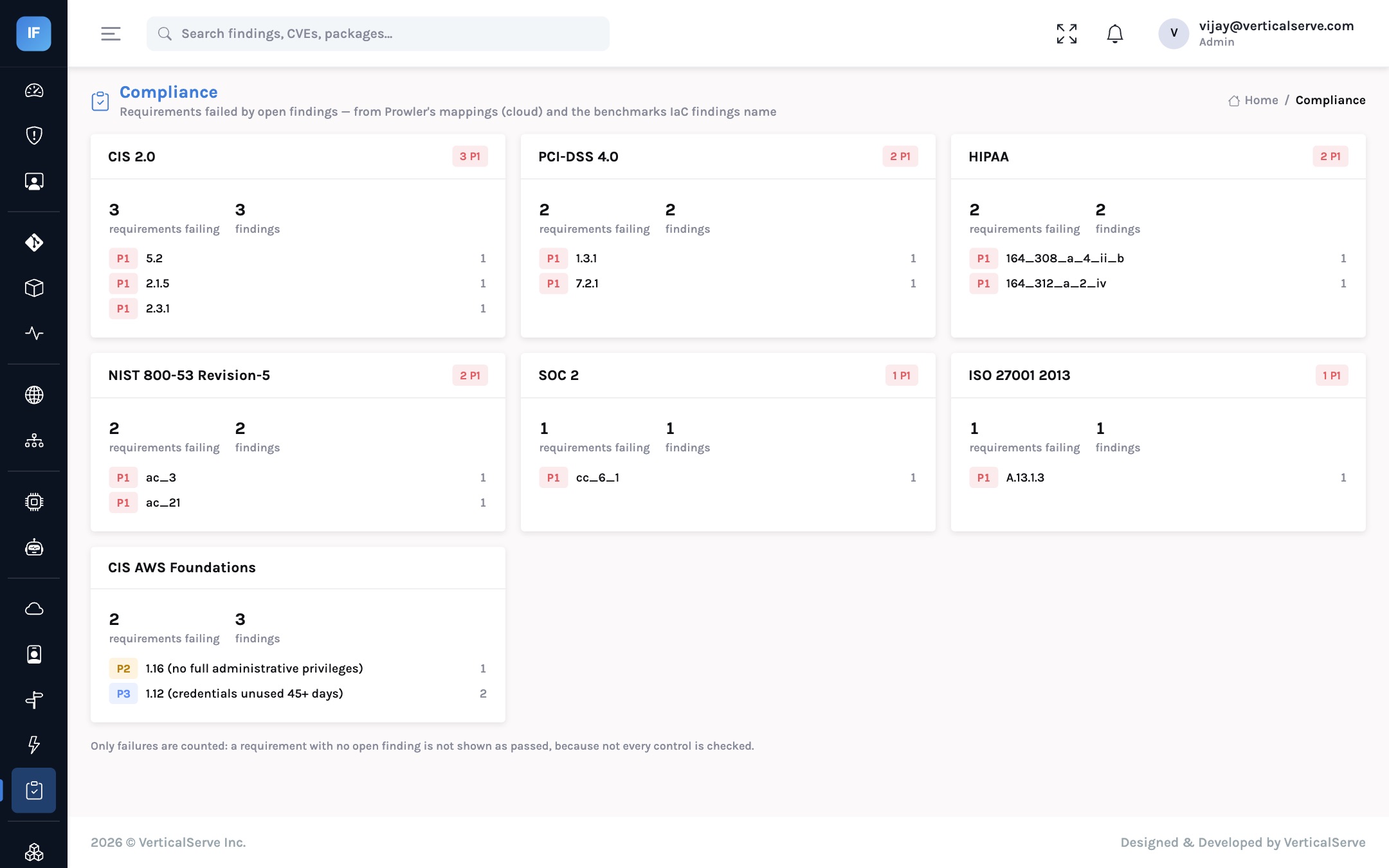
Cloud and IaC findings carry the benchmark requirements they violate. The compliance view groups open findings by framework and requirement, worst first, so the audit-prep conversation starts from the evidence.
We show failures, not a percentage passed. Not every control can be checked automatically, and a clean dashboard that implies otherwise misleads auditors and boards.
Architecture
Deliberately boring infrastructure
A security product should be easy to run and easy to audit. InsightFortify is one API service, a worker pool, PostgreSQL and Redis. No graph database, no streaming platform, no proprietary scanning engine to trust blindly.
  sources                     InsightFortify                     people
 GitHub / GitLab  ─┐    ┌──────────────────────────┐
 CI pipelines     ─┤    │ API (FastAPI)            │ ──▶  console (React)
 Web apps / APIs  ─┼──▶ │  normalise · correlate   │ ──▶  CI gate decision
 AWS accounts     ─┤    │  score · paths · SLA     │ ──▶  REST API · webhooks
 Falco            ─┘    └──────┬───────────┬───────┘
                               │           │
                     ┌─────────▼──┐   ┌────▼──────────────┐
                     │ PostgreSQL │   │ Redis queue       │
                     │ + RLS      │   │ → scanner workers │
                     └────────────┘   └───────────────────┘
  workers: trivy · opengrep · gitleaks · syft · checkov · zap · prowler
- Runs in your account — containers on ECS, EKS or any Kubernetes; code never leaves
- Row-level security — tenant isolation enforced by PostgreSQL itself
- Single sign-on — OIDC/SAML, with roles for leads, analysts, developers and auditors
- Secrets by reference — aws-sm://, env:// — never stored as values
- Bring your model — AI explanations and fixes through your own provider, and switch them off per organisation
- REST API — everything in the console is an API call you can script